
 ไทย
ไทย English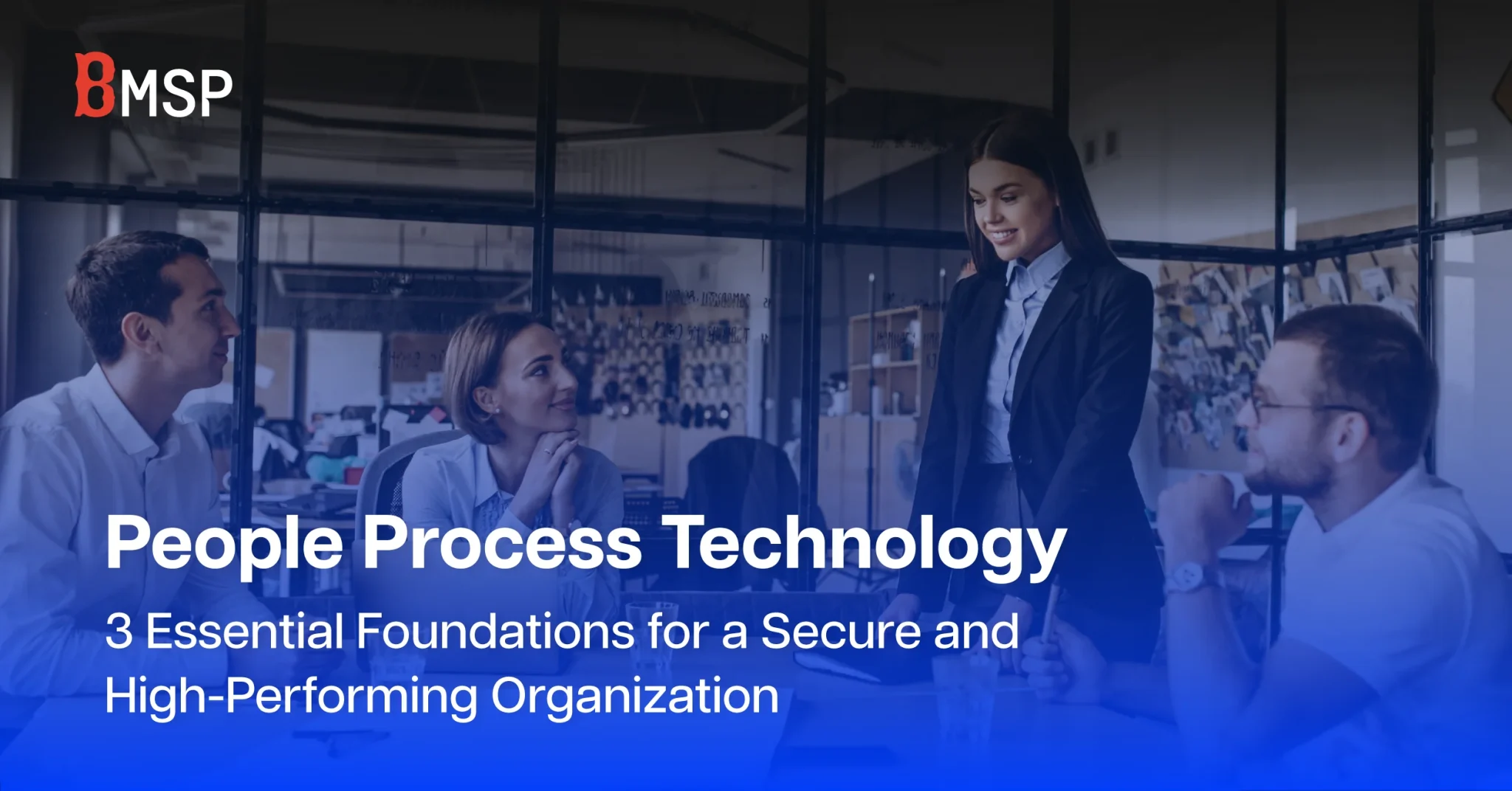

People-Process-Technology, or the PPT Framework, is a fundamental concept that helps organizations improve their operations in a balanced and sustainable way. It focuses on aligning people, processes, and technology so that all three elements work together effectively and support one another.
This article explores what the PPT Framework is, the role of each component, its benefits for organizations, the types of organizations that can apply it, and the challenges that may arise when People, Process, and Technology are not properly aligned. It also looks at how organizations can continuously develop all three areas to strengthen operational resilience, improve efficiency, and enhance preparedness against evolving cyber risks.
Decide what to read?
What is People – Process – Technology?
People – Process – Technology, commonly known as the PPT Framework, is a foundational approach to designing and managing operations so they are efficient, secure, and sustainable.
The framework can be applied across a wide range of areas, including information technology, business operations, organizational management, and cybersecurity operations such as a Security Operations Center (SOC).
The three elements deliver the greatest value when they are balanced and work together. If any one component is missing or underdeveloped, the organization may be unable to prevent, detect, and respond effectively to increasingly complex incidents and threats.
People
People are responsible for setting direction, making decisions, and putting tools and processes into practice.
Even when an organization invests in highly capable technology, that technology may not deliver its full potential if users lack the necessary knowledge, do not understand their responsibilities, or do not have clearly defined roles.
From a cybersecurity perspective, the People component includes everyone from senior management and cybersecurity specialists to employees across the organization, including:
- Executives who establish policies, allocate resources, and oversee cybersecurity risks
- SOC and security teams with the skills to analyze, detect, and respond to threats
- System owners and business units that understand the importance of the information and services under their responsibility
- Employees at every level who have strong security awareness and can help reduce risks caused by human error
Organizations should therefore prioritize continuous skills development, clearly defined roles and responsibilities, and a security-conscious culture in which everyone understands that cybersecurity is a shared responsibility.
Process
Process refers to the procedures and workflows that define who should do what, when it should be done, and how it should be carried out to achieve accurate, consistent, and auditable results.
For cybersecurity operations, important processes may include:
- Security incident detection, analysis, and response
- Vulnerability management and patch management
- Identity, privilege, and access management
- Security log and digital evidence management
- Alerting, incident escalation, and stakeholder communication
- Reporting, post-incident reviews, and continuous improvement of preventive measures
Well-designed processes help reduce confusion, minimize errors, and prevent excessive dependence on the knowledge or abilities of any single individual.
They also allow organizations to establish measurable performance indicators, such as time to detect incidents, time to respond, the number of vulnerabilities remediated within defined timelines, and the number of recurring incidents. These metrics can then be used to continuously improve operational performance.
Processes can also be aligned with established governance frameworks and information security standards, such as an Information Security Management System (ISMS) based on ISO/IEC 27001, helping organizations manage cybersecurity risks in a structured and systematic manner.
Technology
Technology refers to the tools and systems that enable people and processes to operate faster, more accurately, and more efficiently.
In cybersecurity, technology may include Security Information and Event Management (SIEM) platforms, threat detection and response solutions, vulnerability management systems, access control technologies, and automation tools that help reduce repetitive manual tasks.
However, technology should not be selected simply because it is new or advanced. Organizations should evaluate technology based on factors such as:
- Organizational and cybersecurity risks
- Business requirements
- The skills and capabilities of the team
- Compatibility with existing systems
- Total cost of ownership throughout the technology lifecycle
The best technology is therefore not necessarily the solution with the largest number of features. It is the technology that fits the organization’s requirements, can be effectively implemented and operated, and enables teams to make faster and more accurate decisions.
Benefits of Applying the PPT Framework
Adopting the People-Process-Technology Framework enables organizations to look at their operations holistically rather than focusing solely on investments in tools and systems. It also takes into account workforce readiness and the clarity and maturity of operational processes.
Key benefits include:
- Helping employees clearly understand their roles, duties, and responsibilities
- Standardizing workflows to reduce duplication and errors
- Helping organizations select technology that matches business objectives and risk levels
- Improving the ability to prevent, detect, and respond to cybersecurity incidents
- Reducing overdependence on any individual person, process, or technology
- Supporting performance measurement, review, and continuous improvement
- Helping organizations prioritize investments more effectively
When all three elements are developed in a balanced way, organizations can use their resources more effectively, reduce risk, and adapt more successfully to changes in both business and technology.
What Types of Organizations Can Use the PPT Framework?
The PPT Framework can be applied to organizations of all types and sizes, from small businesses and large enterprises to government agencies, financial institutions, hospitals, manufacturers, technology companies, and service providers responsible for critical systems and sensitive information.
The framework is particularly relevant for organizations that:
- Are undergoing digital transformation or modernizing their IT environment
- Want to strengthen their cybersecurity management capabilities
- Are establishing or developing a SOC/CSOC
- Use cloud services or rely on third-party service providers
- Need to comply with cybersecurity standards or regulatory requirements
- Experience problems caused by unclear processes or poor coordination
- Have invested in technology but are not yet realizing its full value
Organizations can adapt the People, Process, and Technology components according to their size, budget, resources, business requirements, and risk profile. There is no requirement for every organization to implement all three components in exactly the same way.
When People, Process, and Technology Work Together
Effective cybersecurity operations require all three components to work in alignment.
- People: Must have the right knowledge, skills, and understanding of their responsibilities
- Process: Must be clear, testable, repeatable, and continuously improvable
- Technology: Must be appropriate, integrated, and capable of supporting effective decision-making
When all three work together, organizations can systematically prevent, detect, respond to, and recover from cybersecurity incidents, while supporting continuous security operations around the clock.
On the other hand, focusing too heavily on only one component can create significant limitations.
Strong Technology, but People Do Not Know How to Use It
An organization may invest in highly capable security tools but fail to use important features effectively. Large volumes of alerts may go unanalyzed, or poor configuration may result in errors, false positives, and security gaps.
Skilled People, but No Supporting Processes
A capable team may be able to solve individual problems effectively, but outcomes can vary depending on each person’s experience and working style.
This can lead to inconsistent operations, difficulties in transferring knowledge, and delays when key personnel are unavailable.
Strong Processes, but Inadequate Technology
Even when procedures are clearly defined, teams may still struggle if their tools require excessive manual work or fail to provide the necessary information.
As a result, the organization may be unable to detect and respond to cybersecurity incidents quickly enough.
The PPT Framework Requires Continuous Development
People-Process-Technology is a continuous cycle of assessment, development, measurement, and improvement.
Organizations should regularly review questions such as:
- Do employees and security teams have the skills required to address new and emerging threats?
- Do existing processes still align with current risks and business operations?
- Does the technology continue to meet organizational needs and integrate effectively with other systems?
- Are operational results meeting the defined metrics and objectives?
Regular reviews help organizations identify gaps, prioritize investments, and continuously improve their readiness to address evolving cybersecurity threats.
The Foundation of BMSP’s Cybersecurity Operations
At BMSP, the People-Process-Technology approach serves as a foundation for systematic cybersecurity management.
It guides everything from developing people and designing effective processes to selecting appropriate technologies, monitoring performance, and continuously improving cybersecurity operations.
By integrating all three elements, we are able to enhance our capabilities to detect, analyze, and respond to cyber threats effectively, while helping our customers strengthen their cybersecurity resilience, maintain business continuity, and stay prepared for cyber risks that continue to evolve.