 ไทย
 English

Information security is not only about preventing data breaches or stopping hackers from gaining access to an organization’s systems. Organizations must also ensure that their data remains accurate, is not modified without authorization, and that critical information or systems are accessible when needed.
Consider a system that stores customer data. Even if the system can prevent unauthorized external users from accessing the information, it may still face Information Security risks if the data is modified without a known cause or if the system becomes unavailable during a critical period.
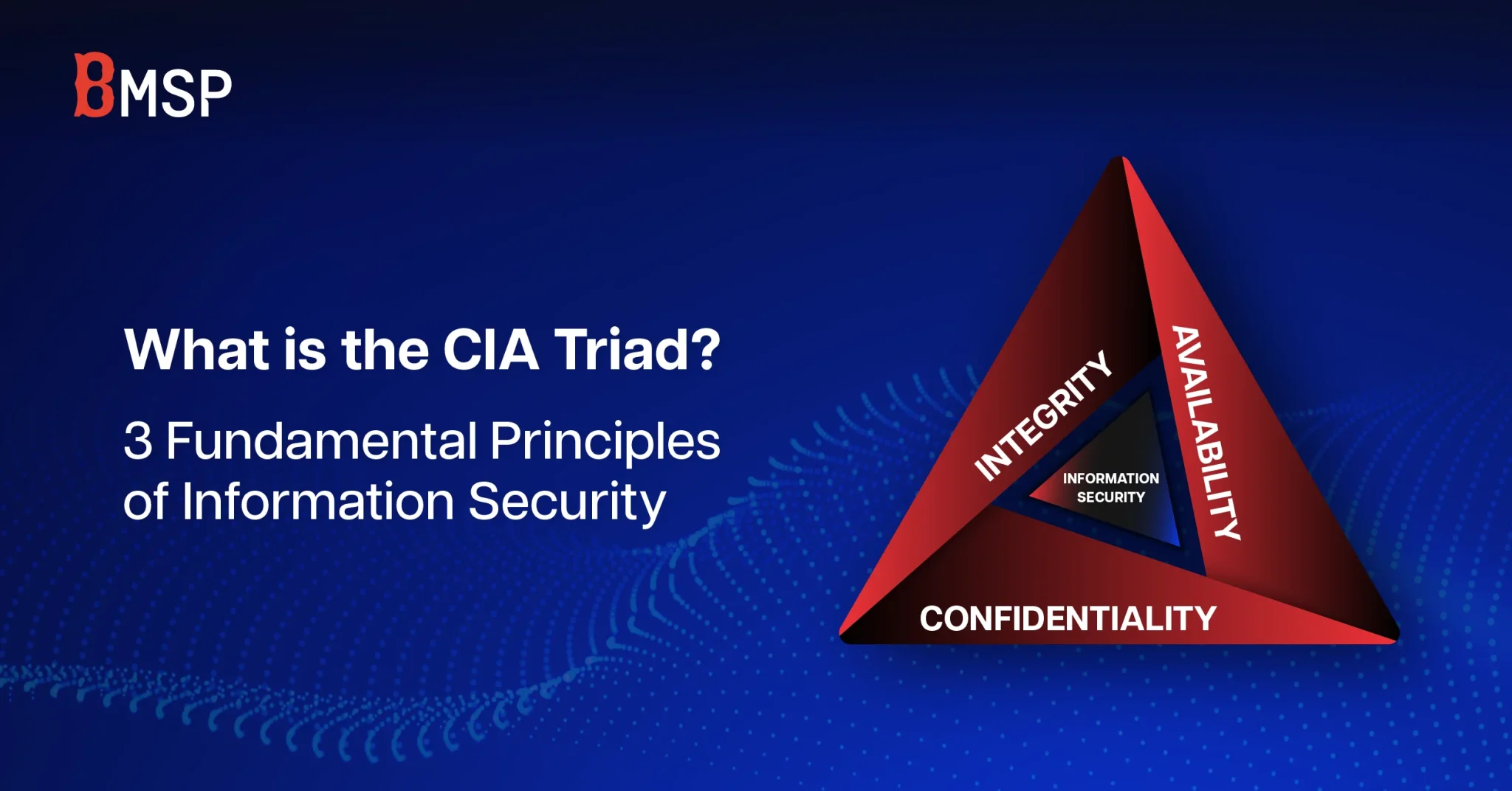
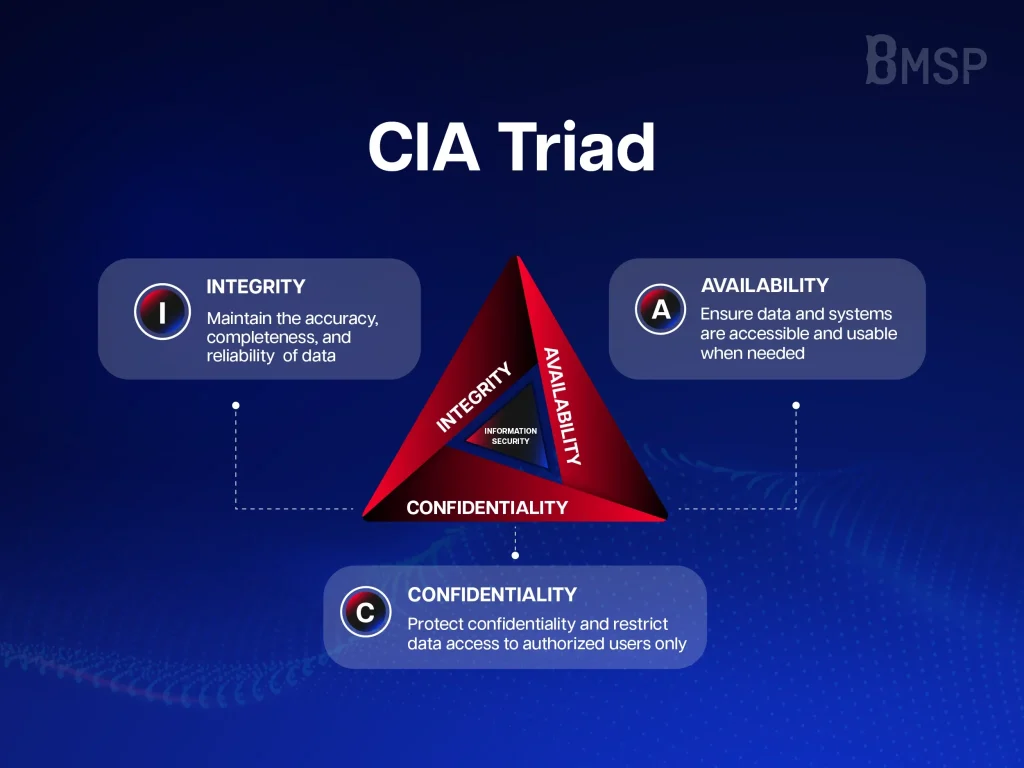
The CIA Triad is therefore used as one of the fundamental concepts of Information Security, helping organizations view the security of their information and systems across three key areas: Confidentiality, Integrity, and Availability.
Key Takeaways
- The CIA Triad consists of Confidentiality, Integrity, and Availability, which are fundamental principles of Information Security.
- Effective Cybersecurity should not focus solely on preventing Data Breaches. It must also consider data accuracy and system availability.
- The CIA Triad can be used as a concept to support Cyber Risk assessment and help organizations select appropriate Security Controls based on their data, systems, and potential business impact.
Table of Contents
What Is the CIA Triad?
The CIA Triad is a fundamental Information Security concept used to consider whether an organization’s information and information systems are appropriately protected. The term CIA represents three key principles:
- Confidentiality – Protecting the confidentiality of information
- Integrity – Maintaining the accuracy and completeness of information
- Availability – Ensuring the availability of information and systems
NIST describes Information Security as the protection of information and information systems from unauthorized access, use, disclosure, disruption, modification, or destruction in order to provide Confidentiality, Integrity, and Availability. NIST publications also directly refer to these three elements as the three pillars of the CIA Triad.
All three elements should be considered together because a single Cybersecurity incident may affect more than one area. For example, Ransomware may make a system unavailable while attackers may also steal data from the organization before encrypting it.
1. What Is Confidentiality? Protecting the Confidentiality of Information
Confidentiality refers to preserving restrictions on information access and disclosure so that information can only be accessed by authorized individuals or systems. It also includes protecting personal information and proprietary organizational data. This is consistent with the NIST definition, which emphasizes preserving authorized restrictions on access and disclosure.
Organizations need to protect many types of confidential information, including customers’ and employees’ personal data, financial information, usernames and passwords, business information, intellectual property, and internal information that should not be disclosed outside the organization.
Risks that may affect Confidentiality include Data Breaches, Unauthorized Access, Credential Theft, Account Compromise, and Phishing, which may allow attackers to access or steal sensitive organizational information.
Measures that can support Confidentiality include Access Control, Multi-Factor Authentication (MFA), Data Encryption, Role-Based Access Control (RBAC), the Principle of Least Privilege, and Data Classification.
For example, assigning access rights based on an employee’s role can help reduce unnecessary access to sensitive information. MFA adds an additional step to identity verification, while Encryption helps reduce the risk of unauthorized parties being able to read data if they obtain access to it.
2. What Is Integrity? Maintaining the Accuracy and Completeness of Information
Integrity refers to protecting information from improper modification or destruction, ensuring that data remains accurate, complete, and trustworthy.
Information Security therefore does not end with keeping information confidential. Even if no data is leaked, unauthorized changes to critical organizational information can still have serious business consequences.
For example, an attacker may choose not to steal transaction data but instead alter a bank account number or transaction amount. Malware may also modify or delete important information within a system. In these cases, Confidentiality may not be directly affected, but the Integrity of the information has been compromised.
Risks related to Integrity can include unauthorized modification of transaction data, changes to Database records, Malware, Unauthorized Configuration Changes, and Insider Threats.
Organizations can reduce these risks through measures such as Access Control, File Integrity Monitoring, Audit Logging, Change Management, Hashing, Digital Signatures, Backup, and Version Control.
Audit Logging and change monitoring are particularly useful because they allow organizations to review what information or configurations were changed, when the changes occurred, which user performed the actions, and whether those actions were authorized.
3. What Is Availability? Ensuring the Availability of Information and Systems
Availability means ensuring that authorized users can appropriately access and use the information, systems, and services they need when required. NIST emphasizes timely and reliable access to and use of information.
A secure system therefore does not simply mean that information remains confidential and unchanged. If users cannot access a critical system when needed, the disruption may prevent the business from continuing its operations.
For example, an unavailable E-Commerce platform, an ERP system that employees cannot access, or a hospital system that cannot retrieve necessary information can all affect operations, even when no information has been stolen or modified.
Risks that may affect Availability include DDoS Attacks, Ransomware, Hardware Failures, Network Outages, System Downtime, Cloud Service Outages, and System Misconfiguration.
Measures that can help improve Availability include Data Backup, Disaster Recovery, Business Continuity Planning, Redundancy, High Availability, Load Balancing, Continuous Monitoring, and Incident Response.
Having a Backup alone may not be sufficient. Organizations should also establish recovery procedures, redundant systems, system monitoring, and incident response plans to help reduce Downtime and restore critical services as quickly as possible after an Incident.
Why Is the CIA Triad Important to an Organization’s Cybersecurity?
One of the key benefits of the CIA Triad is that it helps organizations avoid viewing Cybersecurity only from the perspective of data leakage, because a single Cyber Threat can affect several areas at the same time.
Ransomware, for example, may encrypt data and make systems unavailable, affecting Availability. At the same time, if attackers steal information before encryption, Confidentiality may also be affected. If data is modified or destroyed, Integrity may be affected as well.
Account Compromise is another example. If an attacker takes control of a user account, they may access information they are not authorized to view, affecting Confidentiality. If the compromised account is then used to modify or delete data, Integrity may also be affected.
Similarly, System Misconfiguration, such as incorrectly configured permissions, may expose internal information to external users. Incorrect configurations may also cause service disruption, meaning a single incident can affect both Confidentiality and Availability.
Using the CIA Triad as part of security analysis therefore helps organizations understand the broader impact of Cyber Threats rather than considering only whether a system has been attacked.
How Can the CIA Triad Be Applied to Organizational Risk Management?
Organizations can use the CIA Triad as one of the concepts supporting Information Security risk assessment. The process can begin by identifying important information, systems, or Business Services and then assessing how a Security Incident could affect their Confidentiality, Integrity, and Availability.
Questions organizations may consider include:
- If this information were disclosed to an unauthorized party, how much impact would it have on the organization, customers, or business partners?
- If the information were modified and could no longer be trusted, how would it affect business processes or decision-making?
- If the system became unavailable for one hour, one day, or several days, how would the business be affected?
This approach is also consistent with Impact assessment in Information Security. NIST identifies potential impacts on operations, assets, individuals, or other organizations resulting from the loss of Confidentiality, Integrity, or Availability of information or information systems.
Once the potential impact is understood, organizations can use this information to help prioritize risks and select appropriate Security Controls. For example, a system that must operate 24 hours a day may require greater emphasis on High Availability and Disaster Recovery, while a Database containing large amounts of personal information may require stronger Access Control and Encryption.
However, protecting the CIA Triad should not depend on Technology alone. It should cover People, Process, and Technology, including personnel, access management processes, internal policies, monitoring, Incident Response, and the Cybersecurity tools selected by the organization.
Examples of Applying the CIA Triad in an Organization
To better understand how the CIA Triad can be applied in practice, consider several systems commonly found within organizations.
Customer Database
For a Database containing customer information, Confidentiality may involve restricting access and encrypting customer data to prevent unauthorized users from accessing it.
For Integrity, the organization should control who is authorized to modify information and maintain Audit Logs or records of changes so that activities can be reviewed later.
For Availability, appropriate Backup and recovery processes should be implemented so that information can be restored if data is damaged or the primary system becomes unavailable.
Cloud or Business Application
For Cloud environments or Business Applications, organizations may use MFA and Identity & Access Management (IAM) to support Confidentiality and control access.
For Integrity, organizations can monitor Configuration Changes, Activity Logs, and administrator privileges to identify abnormal or unauthorized changes.
Availability may be supported through Redundancy, Continuous Monitoring, Backup, and Disaster Recoveryto improve service continuity.
Corporate Email Systems
Corporate Email is another system where all three elements of the CIA Triad are important.
For Confidentiality, organizations should reduce the risk of Account Compromise and Unauthorized Access to prevent unauthorized individuals from accessing sensitive messages or information.
For Integrity, organizations should consider the risk of falsification or modification of information, as well as the trustworthiness of senders and messages.
Availability means ensuring that Email services remain continuously accessible. If Email becomes unavailable, both internal and external business communications may be immediately affected.
These examples demonstrate that a single Security Control may support more than one element of the CIA Triad. The importance of Confidentiality, Integrity, and Availability may also vary depending on how each system is used and its potential impact on the business.
Key Summary
The CIA Triad helps organizations view Information Security through three fundamental elements: Confidentiality, Integrity, and Availability. This includes preventing information from being disclosed to unauthorized parties, maintaining the accuracy and reliability of information, and ensuring that information and systems remain available when needed.
The concept also helps organizations take a broader view of Cyber Risk because a Security Incident does not always have to involve a Data Breach. Unauthorized modification, destruction of information, or service disruption can all create significant business impact.
Therefore, applying the CIA Triad when assessing critical information and systems can help organizations determine what needs to be protected and select Security Controls that are appropriate for their risks and potential business impact.
Strengthen Your Organization’s Security with Cybersecurity Services from BMSP
Effectively maintaining Confidentiality, Integrity, and Availability requires Technology, management processes, and experienced professionals who can help prevent, detect, and respond to Cyber Threats that may affect an organization’s information and systems.
BMSP provides End-to-End Cybersecurity and IT Managed Services, covering IT Infrastructure management, threat protection, security detection and monitoring, CSOC services, and ongoing Cybersecurity operations across both on-premises systems and Cloud Environments.
BMSP has also achieved ISO/IEC 27001:2022 certification for its Information Security Management System (ISMS) from INTERCERT, reflecting its commitment to systematically managing Information Security in accordance with internationally recognized standards.
If your organization is looking to apply the CIA Triad as a framework for assessing critical data and systems, or work with a Trusted Cybersecurity Partner that can support both implementation and ongoing operations, BMSP’s specialists can help assess your requirements and identify an approach that aligns with your business needs.
References
NIST – Confidentiality, Integrity, Availability (CIA)