
 ไทย
ไทย English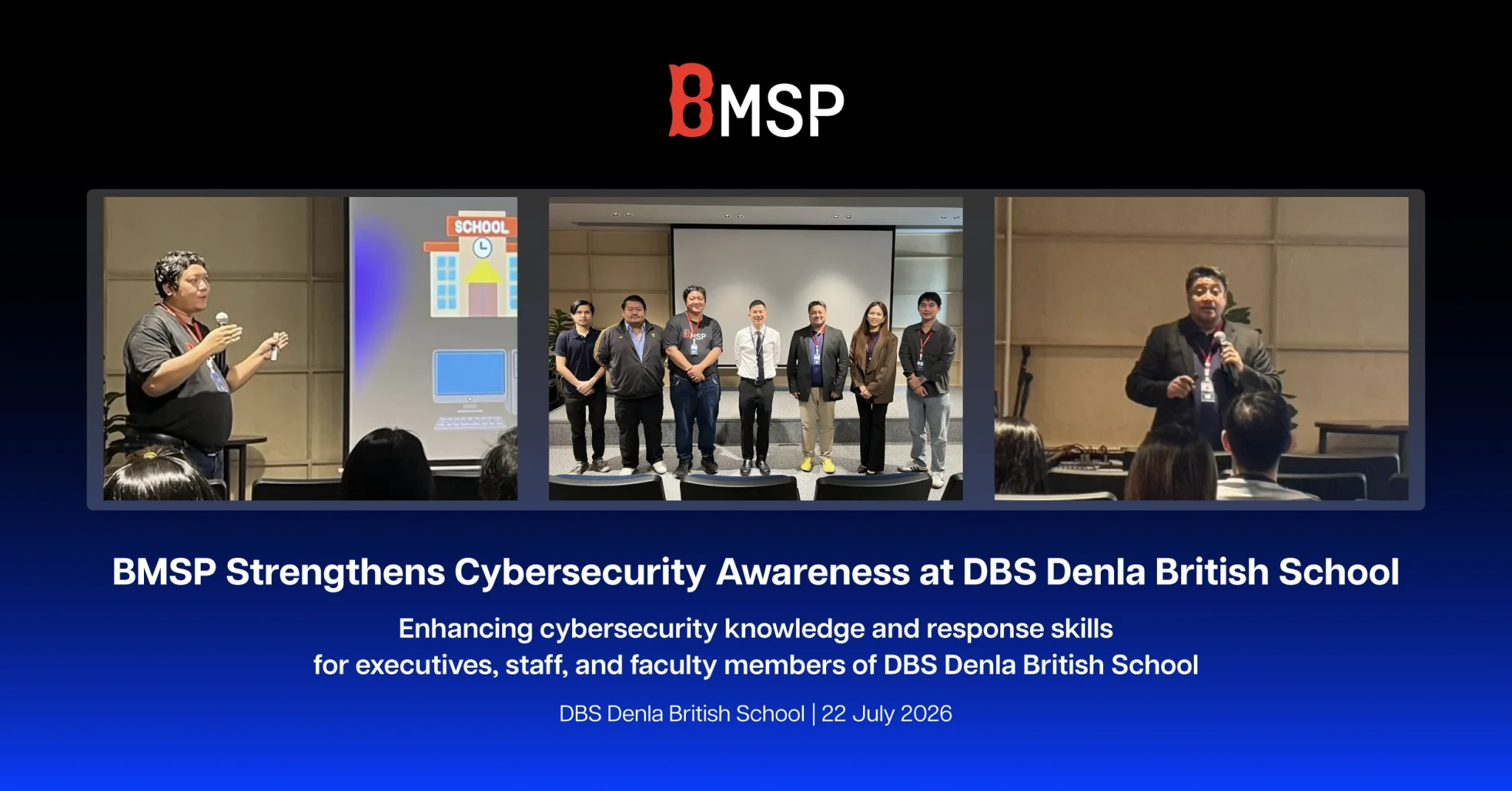

On July 22, Mr. Kris Navani, Co-Founder and Director, and Mr. Nakarin Jirakul, Chief Security Officer (CSO) and Director at BMSP, were invited to deliver a Cybersecurity Awareness Training session for executives, staff, and faculty members of DBS Denla British School.
The training was designed to strengthen participants’ knowledge, understanding, and awareness of cyber threats that can occur in both everyday life and the workplace. Participants learned about common attack methods, warning signs, preventive measures, and appropriate ways to respond to cybersecurity incidents.
The session also emphasized that cyber risks can arise from the way employees use devices, email, the internet, and digital platforms. Even a small mistake, such as clicking a malicious link, opening an unsafe attachment, or disclosing sensitive information, can lead to damage involving corporate data, business systems, reputation, and organizational trust.
Key Topics Covered in the Training
AI Phishing and Deepfakes
Participants learned about the risks of using artificial intelligence to create increasingly realistic and convincing fake messages, images, audio, and videos.
Examples include phishing emails, fraudulent SMS messages, and chat messages designed to imitate the communication style of executives, colleagues, or well-known organizations.
Attackers may also use deepfake technology to impersonate the face or voice of a trusted person. These techniques can be used to pressure victims into transferring money, revealing passwords, sharing sensitive information, or taking urgent action.
Users should therefore verify identities and confirm unusual requests through a separate communication channel, particularly when requests involve financial transactions, confidential information, or changes to established business processes.
Passkeys and Passwordless Authentication
Weak passwords remain one of the most common security weaknesses used by attackers to gain access to corporate accounts and systems.
Common risks include using short or easy-to-remember passwords, incorporating personal information such as dates of birth or names, using predictable numbers, and reusing the same password across multiple platforms.
The training introduced best practices for creating secure passwords and using Multi-Factor Authentication. Participants also learned about passkeys and passwordless authentication, which can help reduce the risks of password theft and phishing while providing a more convenient and secure login experience.
Social Engineering
Many cyber threats begin with psychological manipulation, commonly known as social engineering.
Attackers exploit trust, fear, urgency, or curiosity to persuade victims to disclose information or take a particular action.
Common examples include impersonating executives, IT personnel, business partners, delivery companies, or government agencies to request sensitive information, ask users to open attachments, click links, download software, or transfer money.
Participants practiced identifying suspicious behavior and messages while learning the principle of “Stop, Check, and Verify” before responding to unusual requests.
Digital Privacy and Secure Hybrid Working
Modern work can take place in the office, at home, or in public locations. As a result, corporate information and devices are exposed to a wider range of risks.
Examples include connecting to public Wi-Fi networks, leaving devices unattended, sharing computers with other people, or discussing confidential information in open areas.
Participants learned how to protect their privacy in the digital environment, manage access permissions, review privacy settings on applications and social media platforms, and use devices and networks securely when working outside the organization.
Ransomware, Safe Internet Use, and Responsible Digital Citizenship
Ransomware is a cyber threat that can encrypt information, block access to business systems, and demand payment from an organization.
These attacks often begin with phishing emails, fraudulent websites, unauthorized software, or vulnerabilities in systems that have not been updated.
The training therefore highlighted the importance of using the internet carefully, verifying the source of files and websites, regularly updating systems and software, maintaining backups, and reporting suspicious activities to the responsible team as quickly as possible.
Beyond protecting themselves, all users also play an important role as responsible digital citizens. This includes respecting the rights and privacy of others, verifying information before sharing it, avoiding the distribution of false or harmful content, and using technology responsibly and ethically.
Cybersecurity Awareness as a Critical Line of Defense
Cyber threats can affect people in every role and every type of organization. Building cybersecurity awareness among employees is therefore one of the most important lines of defense.
When users can recognize suspicious activity, make informed decisions, and report incidents quickly, they can help reduce the likelihood of a successful attack and minimize the potential impact on the organization.
BMSP would like to thank DBS Denla British School for its trust and for the opportunity to share cybersecurity knowledge with its executives, staff, and faculty members.
For organizations seeking to strengthen cybersecurity awareness, reduce risks associated with user behavior, and prepare employees for emerging threats, BMSP is ready to support cybersecurity knowledge sharing and help organizations build stronger security awareness.
Contact BMSP today for consultation and assistance in designing Cybersecurity Awareness Training programs or cybersecurity solutions tailored to your organization’s environment, risks, and requirements.